
The automotive industry stands at a pivotal crossroads. Electric vehicles have transitioned from niche curiosities to mainstream transportation, and the supercar segment—historically dominated by thunderous internal combustion engines—is undergoing a radical transformation. For luxury exotic car rental operators, this shift represents both a challenge and an unprecedented opportunity. Electric supercars are not merely the future of exotic car rentals; they are reshaping what luxury, performance, and exclusivity mean in the 2020s.
The Electric Supercar Revolution: From Concept to Reality
Five years ago, the idea of a 1,900+ horsepower, zero-emission supercar capable of 200+ mph acceleration would have seemed relegated to science fiction. Today, it's reality. The Rimac Concept Two (rebranded as the Rimac Nevera), the Lotus Evija, the Pininfarina Battista, and the emerging Aspark Owl represent a new category of hypercar: pure electric, extraordinary performance, and environmental responsibility combined into a single vehicle.
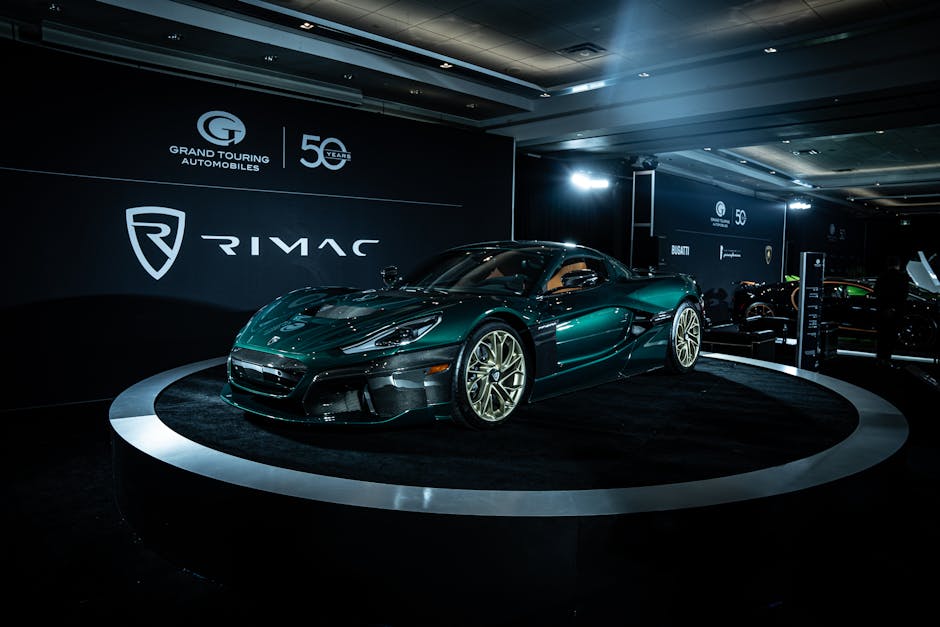
The Rimac Nevera, Croatia's technological marvel, epitomizes this revolution. Producing 1,914 horsepower and achieving 0-60 mph in 1.85 seconds, the Nevera doesn't just match the acceleration of gasoline supercars—it dramatically surpasses them. The Lotus Evija, the British marque's first all-electric hypercar, combines 2,011 horsepower with a 2,000-pound curb weight, creating an unparalleled power-to-weight ratio. The Pininfarina Battista, named after the founder of the legendary Italian design house, produces 1,900 horsepower and targets a 0-60 time of 1.9 seconds.
These aren't theoretical exercises. These are production vehicles, with limited builds (Nevera: 150 units, Evija: 130 units, Battista: 150 units), ownership commitments from global elites, and real-world performance data that challenges everything the automotive industry previously understood about acceleration, handling, and regenerative braking.
Performance Without Compromise: Why Electric is Winning
Traditional supercar enthusiasts often argue that electric vehicles sacrifice the visceral joy of a naturally aspirated engine's roar. This argument, while emotionally resonant, has become technically irrelevant. Electric motors produce peak torque instantaneously—no gear shifting, no rev matching, no delay between throttle input and acceleration. A 2,000 horsepower electric motor delivered to four independently controlled wheels at the exact moment a driver applies accelerator input creates a driving experience that gasoline engines simply cannot replicate.
The Rimac Nevera's all-wheel-drive system showcases this advantage. Each wheel receives customized power delivery via independent motor control. Cornering? The car adjusts wheel torque to optimize traction. Acceleration? Maximum power distributed perfectly. Regenerative braking? Deceleration energy converts to battery charge. This is engineering perfection that's only possible with electric powertrains.
Furthermore, the driving dynamics are revolutionary. Electric supercars have dramatically lower centers of gravity—batteries sit beneath the floor, not in the engine compartment. Weight distribution is perfectly balanced. Handling characteristics that would require decades of development with internal combustion engines are achieved immediately with electric architecture. The Lotus Evija's 2,000-pound weight makes it lighter than many mid-size sedans, yet produces hypercar performance.
Range anxiety, once the Achilles heel of electric vehicles, has been solved for supercars. The Nevera offers 340 miles of EPA-estimated range. For owners accustomed to refueling every 200-300 miles in traditional supercars, 340-mile range eliminates any practical concerns. Fast-charging technology continues advancing; a 15-minute charge adds 200 miles of range.
The Environmental Inflection Point: Why Customers Actually Care
Luxury goods are increasingly intertwined with environmental and social responsibility. A 2024 Deloitte Luxury Report found that 73% of luxury goods consumers consider environmental impact in purchasing decisions. For exotic car rentals, this trend is reshaping customer expectations. A client willing to spend $500-$1,500 for a weekend supercar rental increasingly asks: "Does this company offer electric options?"
Miami, specifically, has become ground zero for this shift. The city's combination of ultra-high-net-worth residents, international tourism, climate consciousness, and technology adoption creates perfect conditions for electric supercar adoption. Miami's vulnerability to sea level rise has made environmental consciousness not a luxury preference but a cultural priority. Renters in Miami increasingly view choosing an electric supercar as a statement of both sophistication and responsibility.
Rental operators who offer electric supercars capture this market segment. The rental premium for electric supercars (typically 15-25% above gasoline equivalents) is justified by exclusivity, environmental credentials, and cutting-edge technology appeal. For a $500/hour gasoline supercar, offering a $600/hour electric alternative captures environmentally conscious, tech-forward customers who would otherwise choose competing rental operators.
The Charging Infrastructure Challenge (And How to Solve It)
The practical concern for rental operators is legitimate: how do we manage charging between rentals? The answer is multi-layered infrastructure planning.
Miami's charging network is expanding rapidly. Companies like Tesla, Electrify America, and Evgo have deployed thousands of Level 3 DC fast chargers throughout South Florida. A Rimac Nevera charges from 10% to 80% battery in approximately 20-30 minutes on DC fast charging. For a rental operator managing multiple electric supercars, a strategy of staggered bookings with intermediate fast-charging sessions during off-hours (evening, early morning) optimizes vehicle availability while ensuring charges.
Premium rental operations are installing dedicated Level 2 chargers at their facilities. An 11 kW Level 2 charger adds 30-40 miles of range per hour—sufficient for overnight recharging between daily rentals. For weekend bookings, vehicles arrive fully charged Friday morning and return Sunday evening with time for Monday recharge. This model works seamlessly with rental demand patterns.
The capital investment ($5,000-$15,000 per charger installation) is recouped through rental premiums within 12-18 months. The long-term competitive advantage—being the only premium rental operator in Miami offering electric supercars—is invaluable.
Market Positioning: Luxury, Technology, And Responsibility
Exotic car rentals have traditionally positioned themselves around raw performance and aspiration. "Rent a Ferrari. Feel like a legend." Electric supercars enable a more sophisticated positioning: "Experience the future of performance. Rent an electric hypercar."
For Miami's ultra-high-net-worth demographic, this positioning is powerful. Clients who own Rolls-Royces, Bentleys, and private jets are familiar with cutting-edge technology and environmental consciousness. The Rimac Nevera's carbon-fiber monocoque, its Croatian engineering heritage, and its instantaneous 1,900 horsepower delivery appeal to clients who want to experience the absolute frontier of automotive technology.
The marketing narrative is compelling: "Traditional supercars deliver thrills. Electric supercars deliver the future." This positions a rental operator not as a provider of nostalgic experiences but as a curator of cutting-edge luxury.
Why 2026 Is the Inflection Point
We're in 2026. The Rimac Nevera, Lotus Evija, and Pininfarina Battista are no longer vaporware—they're on roads. Technology that seemed impossible five years ago is now operational. Charging infrastructure that didn't exist is being deployed at scale. Customer demand for sustainable luxury is accelerating.
For exotic car rental operators, the next 12-24 months will determine industry positioning for the next decade. Operators who integrate electric supercars now—establishing infrastructure, marketing positioning, and customer familiarity—will become the premium choice for environmentally conscious, technology-forward renters. Those who delay risk appearing outdated as customer expectations shift.
Miami is perfectly positioned for this transition. The city's climate consciousness, technology adoption, charging infrastructure development, and ultra-high-net-worth demographic create optimal conditions for electric supercar rentals to thrive.
The Path Forward: Electric Supercars at NXL
The future of exotic car rentals is electric. Not exclusively—traditional supercars will remain available for purists and collectors. But increasingly, the most exciting, most technologically advanced, most responsibly progressive vehicles in any rental fleet will be electric.
The Rimac Nevera, Lotus Evija, and Pininfarina Battista represent the pinnacle of automotive engineering. They are the cars of the future, available today. Experiencing one—accelerating from 0-60 in under two seconds in complete silence, feeling instant torque delivery, understanding how 2,000 horsepower transforms acceleration and handling—is a genuine technological achievement to witness and experience.
Electric supercars are not a trend. They are a fundamental shift in what supercars can be. The future of exotic car rentals is here, and it's powered entirely by electrons.
Explore NXL's latest supercar collection and reserve your next unforgettable experience →
NXL Certified Exotic Rentals: Where cutting-edge technology meets luxury performance. The future of supercars starts here.