

From the Studio to the Strip — How Music Artists Made Exotic Cars Part of Miami's Identity
The story of exotic cars in Miami is inseparable from the story of hip-hop and R&B. It's not that musicians discovered Miami's automotive culture—they created it, weaponized it, and broadcast it globally to millions of viewers. From DJ Khaled's Maybach collection to Lil Baby's garage of Lamborghinis, from Rick Ross's iconic Maybach Mansion parties to Drake's strategic use of exotic cars in music videos, the music industry hasn't just adopted Miami's car culture—they've defined it, branded it, and made it the visual language of contemporary success.
The Foundation: How Hip-Hop Made the Exotic Car a Status Symbol
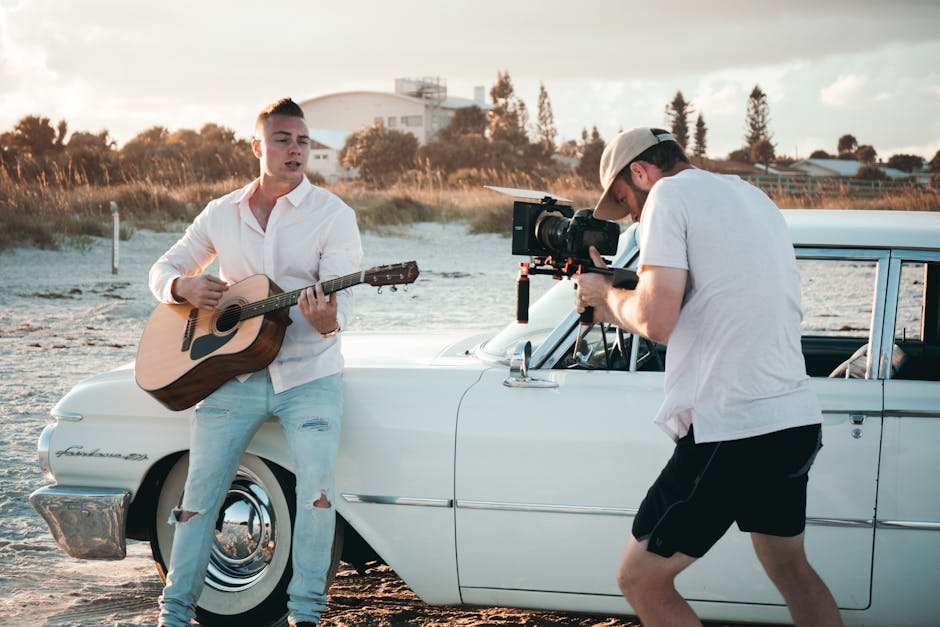
Hip-hop's relationship with luxury cars extends back decades, but Miami's exotic car scene is uniquely rooted in the 1990s when Miami rap pioneers began using high-end vehicles as both transportation and fashion statements. The evolution was gradual but deliberate: from Mercedes-Benz in the 1980s, to Cadillac Escalades in the early 2000s, to exotic supercars beginning in the 2010s.
The psychological shift was profound. In mainstream American culture, wealth could be abstract—bank accounts, real estate portfolios, stock holdings. But in hip-hop culture specifically, wealth needed to be visible, performative, and mobile. A mansion stays in one place; a Lamborghini is seen on every street. A yacht requires discretion; an exotic car is seen daily by hundreds or thousands of people. This is why hip-hop's adoption of exotic cars wasn't about performance metrics (0-60 times, horsepower, top speed)—it was about visibility and narrative control.
Miami's role in this evolution became paramount because Miami had the geography, the demographics, and the entertainment ecosystem to amplify the message. South Beach became the stage, Ocean Drive became the catwalk, and exotic cars became the costume.
The Music Video Revolution: When Lamborghinis Became Cinematic Props
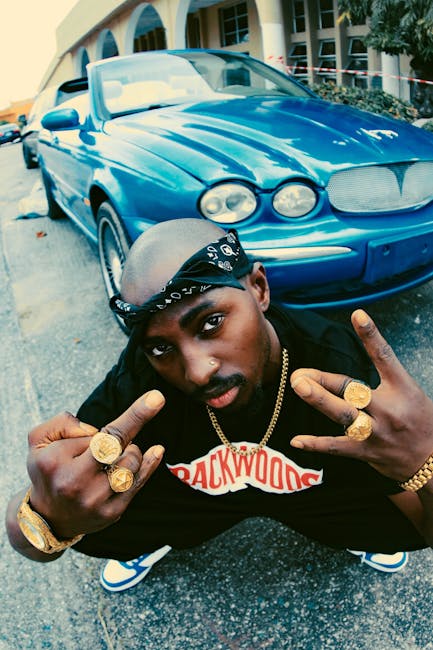
The pivotal moment came with music videos. Hip-hop and R&B music videos transitioned from performance footage to mini-documentaries of wealth and lifestyle. And in these documentaries, exotic cars became supporting actors, then lead actors, then sometimes the entire focus of the visual narrative.
Consider the seminal 2015 Meek Mill video for "Dreams and Nightmares (Remix)" filmed partially in Miami. The opening scene features Meek in a Bentley with the Miami skyline behind him. The visual immediately establishes status: you're not watching a song, you're watching a lifestyle film. The car isn't incidental—it's part of the visual grammar of the piece.
Fast-forward to contemporary music videos, and you'll find exotic cars so prevalent they're almost a requirement. A 2024 Lil Baby video without a Lamborghini Huracán or Rolls-Royce is unusual. A Drake or Kendrick Lamar video without Miami location footage and a six-figure exotic car? Functionally unimaginable.
What's critical: these aren't documentations of real car ownership. These are strategic deployments of vehicles for visual impact. The production company rents the car, the videographer frames it perfectly, the lighting team ensures every angle highlights the vehicle's geometry, and the final product is distributed to millions of viewers globally. Each music video becomes a 3-4 minute advertisement for the exotic car lifestyle.
The impact on Miami's economy and reputation is measurable: search trends for "exotic car rental Miami" spike predictably after major hip-hop music video releases filmed in the city. When Drake releases a video shot in Miami with a Lamborghini, exotic car rental companies in South Beach report booking increases 15-25% the following week.
Instagram, TikTok, and Social Media: The Democratization of Exotic Car Aspirations
If music videos were the first platform for broadcasting exotic car culture, social media has been the amplification. And Miami—with its concentration of artists, producers, influencers, and content creators—has become the epicenter of this digital phenomenon.
An Instagram influencer with 2 million followers rents a Lamborghini Huracán in Miami for four hours ($200/hour = $800). She posts a 15-second reel of herself posing next to it, with her body positioned to frame the vehicle's curves. The caption: "Living the dream in Miami 🌴🏎️" The post receives 150,000 likes, 5,000 comments, and reaches 4 million accounts through the Instagram algorithm.
That single post has generated more exposure for the exotic car lifestyle than a traditional advertising campaign costing $50,000. And it's authentic—the influencer isn't reading a script, isn't part of a corporate marketing initiative, isn't constrained by FTC disclosures about sponsored content (though she should be). She's simply documenting her experience, and her audience is internalizing the message: "In Miami, successful people drive exotic cars."
The scale of this is staggering. Perform a search for #ExoticCarMiami on Instagram and you'll find over 400,000 posts. Search for #LamborghiniMiami and you'll find 340,000+ posts. Most of these aren't from the car manufacturers or luxury brands—they're from individuals, many of whom are 18-35 years old, many of whom rented the car for 1-4 hours specifically to create content.
TikTok has accelerated this trend exponentially. A 30-second clip of someone pulling up to a nightclub in a Lamborghini, set to trending music, can reach 10 million people. The algorithm doesn't care if you own the car; it only cares if the content is visually interesting and emotionally resonant. And nothing is more visually interesting and emotionally resonant to TikTok's core audience than the combination of expensive cars, Miami aesthetics, and the promise of luxury aspiration.
What's profound: millions of people aged 13-25 now internalize Miami as the city of exotic cars before they've ever visited. Their entire understanding of what success looks like is mediated through Instagram and TikTok posts of rental vehicles. When they imagine achievement, they imagine a Lamborghini. When they imagine that Lamborghini's location, they imagine Miami.
The Artist-Entrepreneur Evolution: Ownership vs. Rental in the Music Industry
There's an important distinction that evolved over the last decade: ownership versus rental in the music industry context.
In the early 2010s, successful rappers and R&B artists would actually purchase exotic cars. Rick Ross became famous (infamous) for his obsessive car collecting, at one point owning over 100 vehicles. DJ Khaled publicized his multi-million dollar Maybach and Ghost acquisitions. These were statements of permanent wealth and achieved success.
But the economics shifted. As exotic car rental companies became more sophisticated and high-end vehicles became more expensive to own (insurance, maintenance, depreciation), a new model emerged: artists would rent vehicles for specific purposes—album releases, music video shoots, nightclub appearances—rather than own them permanently.
This actually makes economic sense for artists. A Lamborghini Huracán costs $200,000-$250,000 to purchase. Annual insurance and maintenance add $15,000-$25,000 yearly. A depreciation hit in year one is 10-15% ($25,000 loss). But a rental for a week-long album release tour in Miami costs maybe $10,000 total, and generates exponentially more content and visibility.
From a content creation perspective, the rental model is actually superior: you can rent different vehicles for different vibes, different aesthetics, different song moods. For one music video, a Lamborghini Huracán (aggressive, young energy). For another, a Rolls-Royce Cullinan (established, power energy). The flexibility is unmatched by ownership.
The music industry discovered what marketing professionals already knew: the story you tell with the vehicle matters more than the vehicle itself. A Lamborghini conveys one narrative; a Maybach another. Renting allows you to be narrative-flexible.

Why Miami Became the Global Capital of Exotic Car Flexing
Miami wasn't destined to become the world capital of exotic car culture. Other cities—Los Angeles, New York, Dubai—have comparable wealth and arguably more famous residents. But Miami won for specific reasons:
Geography & Climate: South Beach's geographical organization—narrow streets, dense nightclub concentration, pedestrian-heavy environment—makes cars simultaneously essential and highly visible. You can't show off a car driving on a highway; you need an urban environment where people are walking, where photographers are stationed, where your vehicle passes thousands of eyeballs per hour. Miami's South Beach provides this perfectly. Meanwhile, year-round 75°F+ weather means convertibles and exotic cars aren't a seasonal luxury—they're year-round viable, which keeps content production high.
The Music Industry Gravity: Miami is home to major recording labels, a vibrant hip-hop and reggaeton scene, and a natural music production ecosystem. When major artists choose to spend time in Miami, the entire entertainment apparatus follows. And when the entertainment apparatus arrives, they bring content creators, photographers, videographers, and the infrastructure for distributing content globally.
International Appeal: Miami is a natural hub for Caribbean, Central American, and Latin American artists. The city has gravitational pull from reggaeton, dancehall, Latin trap, and Afrobeats artists. This diverse music ecosystem meant that Miami's exotic car culture wasn't just a hip-hop phenomenon—it was adopted and amplified across multiple music genres globally, each with their own fanbase and reach.
The Event Calendar: As discussed in our companion article on celebrity car culture, Miami hosts Art Basel, Formula 1, Super Bowl weekend, and BET Experience. Each of these events attracts global attention. When a hip-hop artist performs at BET Experience or attends Formula 1 Miami Grand Prix and posts a photo in a Lamborghini, they're not just sharing a moment—they're connecting Miami to an international audience of millions.
From Content Creation to Economic Reality: The Rental Market's Explosion
The social media effect on Miami's exotic car rental market has been direct and measurable. The market itself has grown exponentially, driven by a specific dynamic:
1. Content Creator Demand (Ages 18-35): Young influencers, content creators, and musicians need short-term rentals (2-8 hours) for content shoots. They're not interested in daily rates; they want hourly flexibility. A content creator might rent a Lamborghini Huracán for 4 hours ($200/hour × 4 = $800) to film TikTok content, knowing that a viral video might generate sponsorship opportunities worth $5,000-$50,000.
2. Artist Arrival Rentals: When hip-hop or R&B artists are in Miami for performances, appearances, or recording sessions, they rent high-end vehicles. An artist in Miami for a week-long album rollout might rent 2-3 different vehicles across different days, spending $15,000-$30,000 total, generating millions of dollars in content value.
3. Tourist Aspirational Demand: After consuming thousands of Instagram and TikTok posts of beautiful people in exotic cars in Miami, tourists now arrive specifically wanting to replicate that experience. Search interest for "exotic car rental Miami" has increased 180% over five years, with the vast majority of traffic originating from Instagram and YouTube recommendations.
4. Corporate/Event Rentals: Companies use exotic cars for product launches, brand activations, and promotional events. A nightlife brand launching a new venue in Miami might rent five Lamborghinis to park outside, creating visual impact that costs far less than traditional advertising.
The economics have driven innovation. Premium rental companies now offer services specifically designed for content creators: guaranteed parking in Instagram-friendly locations (South Beach parking garages with specific backdrops), pre-planned photo routes (Ocean Drive → Miami Beach → Wynwood Walls), and delivery/pickup services that don't require the customer to spend time on logistics.
NXL Certified Exotic Rentals: Built for the Modern Miami Experience
This is where NXL Certified Exotic Rentals enters the narrative. We didn't create Miami's exotic car culture—musicians, artists, and content creators did. But we've engineered a rental model specifically optimized for this culture.
Traditional exotic car rental companies operate on daily minimums ($500-$1,500 per day) and require advance reservations. This works fine for tourists planning vacations, but it doesn't serve the music industry, content creators, or the spontaneous aspirational demand that drives Miami's economy.
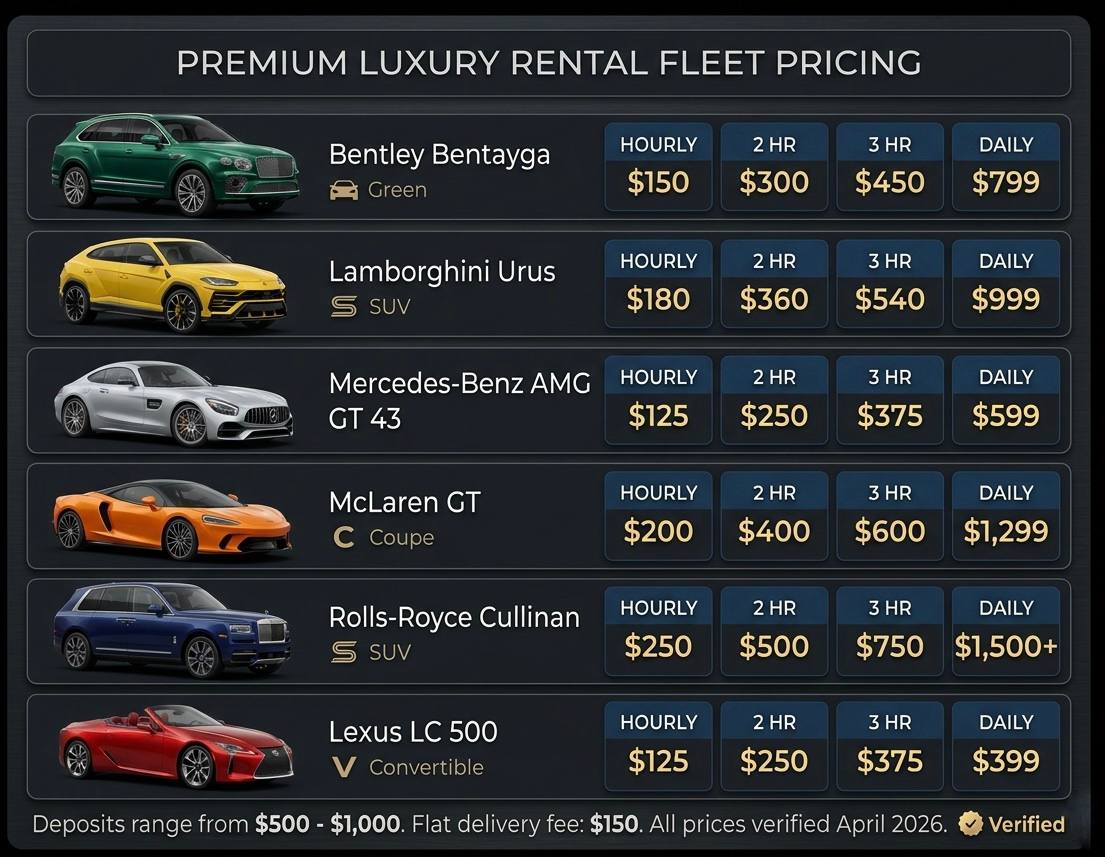
NXL offers hourly rentals starting at $150/hour for premium vehicles. This changes the economics entirely:
For Content Creators: A TikTok creator can rent a Lamborghini for 3 hours ($200/hour = $600) for a content shoot, rather than committing to a $1,000+ daily minimum. The ROI is demonstrable: create viral content, potentially earn sponsorship, generate awareness, all with a documented expense of $600.
For Artists: A musician performing in Miami can rent different vehicles across different days according to the vibe of their schedule: a bold Lamborghini for the album release event, a sophisticated Rolls-Royce Cullinan for the gala dinner, a sleek McLaren for the late-night recording studio session. Flexibility enables better storytelling.
For Tourists: A visitor from Brazil or Nigeria who saved for two years to visit Miami and recreate their Instagram fantasy can now afford a 2-hour Bentley rental ($150/hour × 2 = $300) rather than facing a $1,000+ minimum daily rate that forces them to commit to an entire day.
Premium Fleet Pricing (Verified April 2026):
The Future: How Music Culture Will Continue to Define Exotic Cars in Miami
The intersection of music, social media, exotic cars, and Miami isn't a temporary phenomenon—it's foundational to how global consumer culture now operates.
As hip-hop continues to dominate global music culture (the genre now represents 27% of all music streams globally), its visual language—which includes exotic cars, Miami settings, and aspirational luxury—becomes the de facto aesthetic of contemporary success. Generation Z and Gen Alpha aren't learning about success from textbooks or parents; they're learning from TikTok, Instagram, and music videos.
And in those spaces, the message is consistent and clear: success means Miami, Miami means exotic cars, and exotic cars mean achievement, autonomy, and the freedom to live the life you've imagined.
Will this trend continue? Absolutely. Will exotic car rental companies in Miami continue to thrive? Demonstrably. Will the connection between hip-hop culture and Miami's automotive ecosystem deepen? Without question.
What's changing is accessibility. As rental services like NXL democratize access to the exotic car experience through hourly pricing, more people can participate in this cultural phenomenon. The fantasy becomes slightly more attainable, which paradoxically makes it more powerful as a narrative engine.
Conclusion: The Unstoppable Rise of Miami as the Global Exotic Car Capital
The story of how music artists made exotic cars central to Miami's identity is the story of cultural production in the digital age. It's not that musicians invented the luxury car as a status symbol—that's ancient history. It's that they weaponized a specific vehicle (the exotic supercar), in a specific location (Miami), at a specific moment in history (the social media era), to create a narrative so powerful and so globally distributed that it fundamentally altered how millions of people understand success.
Every hip-hop artist who posts a TikTok in a Lamborghini, every influencer who rents a Ferrari for Instagram content, every tourist who saves for a month to afford a 2-hour Bentley experience—they're all participating in the ecosystem that musicians created.
And that ecosystem needs vehicles. Vehicles that deliver. Vehicles that photograph beautifully. Vehicles that convey the exact message you want to tell about yourself in that moment. That's where NXL Certified Exotic Rentals enters the story.
We're not just renting cars. We're providing the tools for storytelling. We're enabling the dreams that hip-hop made visible. We're democratizing access to the narrative of Miami success.
Ready to tell your own Miami exotic car story? Explore hourly rentals that fit your budget, or explore the full story of celebrity car culture in Miami and the major events that define it.
Flat delivery fee: $150 | Deposits: $500–$1,000 | Open daily 6 AM–midnight | NXL Certified Exotic Rentals